In an era where education is the key to unlocking a nation’s potential, the Government of India has fortified its commitment to students through a powerful digital architecture. The Public Financial Management System (PFMS) stands as the cornerstone of this mission for 2026, transforming the landscape of educational financial aid. This system ensures that financial support is not just a promise, but a seamless, transparent reality for millions. This guide offers a fresh, detailed look at navigating the PFMS scholarship process, empowering you to claim the resources you deserve for your academic journey.
Decoding the PFMS: More Than Just a Scholarship
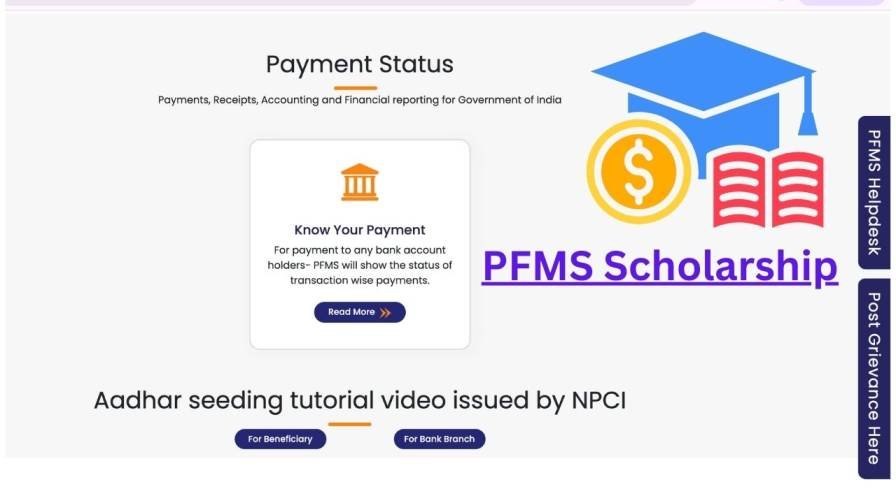
It’s crucial to understand that PFMS isn’t a scholarship scheme itself. Think of it as the highly efficient, digital nervous system of the entire scholarship distribution process. It’s the technology backbone that validates data and executes the transfer of funds.
For the 2026 academic year, this system works in perfect tandem with the National Scholarships Portal (NSP). The NSP is your gateway—the place where you register, apply, and communicate your needs. Once your application is approved, the PFMS takes over, acting as the vigilant treasurer that directly deposits the money into your bank account, cutting out intermediaries and ensuring every rupee reaches its intended destination.
Key Scholarship Programs Managed Under the PFMS Umbrella for 2026
Before you begin, identifying the right scheme is paramount. Here are the prominent centrally-funded programs that utilize the PFMS for disbursement in 2026.
1. Central Sector Scheme of Scholarships for College and University Students
- Purpose: To foster academic excellence and provide financial stability to students from low-income families.
- Who Can Apply? Students who are in the top 20th percentile of their Class 12 board exams and whose family income is less than ₹8 lakh per annum.
- Financial Assistance: A maintenance allowance of ₹10,000 per annum for undergraduate studies and ₹20,000 per annum for postgraduate studies.
- Duration: For the entire duration of the course (up to 5 years for UG and 2 years for PG).
2. Post-Matric Scholarship for SC/ST/OBC Students
- Purpose: To empower students from Scheduled Castes, Scheduled Tribes, and Other Backward Classes to pursue higher education after matriculation.
- Who Can Apply? SC/ST students with a family income up to ₹2.5 lakh per annum, and OBC students with a family income up to ₹1 lakh per annum, studying from Class 11 onwards.
- Financial Assistance: A holistic package covering tuition fees, hostel fees, and a substantial maintenance allowance.
3. Top Class Education Scheme for SC Students
- Purpose: To nurture talent by enabling SC students to access the best educational institutions in the country.
- Who Can Apply? SC students enrolled in recognized premier institutes (like IITs, IIMs, NITs, and top medical/law colleges) with a family income not exceeding ₹4.5 lakh per annum.
- Financial Assistance: Coverage of full tuition fees and incidental expenses up to ₹3.72 lakh per academic year.
4. National Means-cum-Merit Scholarship Scheme (NMMSS)
- Purpose: To arrest the dropout rate at the secondary level and encourage meritorious students from economically weaker sections to continue their education.
- Who Can Apply? Class 9 students who qualify through a state-level examination and belong to families with an annual income of less than ₹3.5 lakh.
- Financial Assistance: A fixed scholarship of ₹12,000 per year (₹1,000 per month) for studies from Class 9 to 12.
5. Pre-Matric Scholarship for Minorities and SC/ST Students
- Purpose: To create a supportive environment for students from minority communities and SC/ST backgrounds at the school level.
- Who Can Apply? Students from notified minority communities (Muslims, Christians, Sikhs, Buddhists, Jains, Parsis) and SC/ST categories enrolled in Classes 9 and 10.
- Financial Assistance: Support towards admission fees, tuition fees, and a monthly maintenance allowance.
Your Step-by-Step Guide to a Successful Application
Applying for a scholarship through this system requires careful attention. Follow this pathway to ensure your application is processed without a hitch.
Stage 1: Initial Registration on the NSP
- Action: Visit the official National Scholarships Portal at https://scholarships.gov.in/.
- Process: Click on “New Registration.” Read the instructions carefully.
- Details: Fill in your essential details: full name (as on school records), date of birth, a mobile number you actively use, and a valid email address.
- Outcome: You will receive a unique Permanent Registration ID and password. Save this information securely. It is your key to the entire process.
Stage 2: Logging In and Selecting Your Scheme
- Action: Log in using your credentials.
- Process: Navigate to the “Application Form” section. A dropdown menu will list all available PFMS-linked scholarships for 2026.
- Important: Carefully read the eligibility criteria for each scheme before selecting the one that fits your profile.
Stage 3: Filling Out the Application Form
- Personal & Academic Details: Enter your personal information, including your address, previous academic qualifications, and current institution. Ensure your name is spelled exactly as it appears on your Aadhaar card and bank records.
- Income Details: Provide accurate family income information. This must be supported by a valid income certificate.
- Bank Account Information: This is the most critical step. Your bank account must be:
- In your own name (not a joint account with a parent/guardian as the primary holder, unless it’s a minor account).
- Active and operational.
- Seeded with your Aadhaar number.
- Double-check the Account Number and IFSC Code. A single digit error will result in a payment failure.
- Institute Details: Correctly enter your institute’s DISE code or University code to verify your enrollment.
Stage 4: Uploading Supporting Documents (2026 Specifications)
- Preparation: Scan all necessary documents. Ensure they are clear and legible. The standard format is JPEG or PDF, with file sizes ideally between 100KB and 500KB.
- Checklist:
- Aadhaar Card (clearly visible)
- Recent Passport Size Photograph
- Mark sheet of the last qualifying examination
- Current year admission proof or ID card issued by your institute
- Caste Certificate (if applying under SC/ST/OBC category)
- Income Certificate (issued by a Tehsildar or other competent authority)
- Domicile Certificate
- First page of your Bank Passbook (showing your name, account number, IFSC, and branch)
- A signed declaration as per the format available on the NSP website.
Stage 5: Final Review and Submission
- Action: Before hitting ‘Submit’, use the “Preview” option. Scrutinize every field—names, numbers, and dates.
- Outcome: Once satisfied, submit the application. Post-submission, changes are only allowed during a designated correction window.
- Final Step: Download and print the Acknowledgment Slip. This slip contains your unique Application ID, which is essential for all future communication and status tracking.
How to Track Your Scholarship in 2026
The PFMS system is designed for complete transparency. You can track your scholarship’s journey in two primary ways.
Method 1: Tracking Payment Release on the PFMS Portal (Most Direct)
This method tells you if the government has successfully released the funds to your bank’s network.
- Go to the official PFMS website: https://pfms.nic.in/.
- Navigate to the ‘Payments’ menu and select ‘Know Your Payments’.
- Choose the option ‘Search by Account Number’.
- Enter your Bank Name, your full Account Number, and select the Financial Year (e.g., 2026-27).
- Enter the security code and click ‘Search’.
- A list of all DBT (Direct Benefit Transfer) credits to your account will appear. Find your scholarship. The status will show as ‘Success’ or ‘Failed’, along with the date, amount, and a unique PFMS Payment Reference ID.
Method 2: Tracking Application Status on the NSP Portal
This method shows you where your application is in the administrative pipeline.
- Log in to your account on the National Scholarships Portal.
- Go to the ‘Application Status’ section.
- You will see a flowchart-like status update, showing each stage of verification:
- Institute Verification: Pending/Approved/Rejected
- Nodal Officer Verification (District/State): Pending/Approved/Rejected
- Ministry Approval: Pending/Approved
- PFMS Payment Processing: Pending/Processed
A Crucial Distinction: The PFMS portal shows the government’s action (payment release). Your bank balance is not displayed here. To confirm the money is in your account, check your bank’s mobile app, passbook, or SMS alerts. Use the PFMS Reference ID to talk to your bank if the money is delayed.
Essential Eligibility and Guidelines for 2026
- Citizenship: You must be an Indian citizen.
- Academic Performance: Meet the minimum percentage of marks required by the specific scheme (typically 50% or above).
- Income Limits: Your family’s annual income must be below the ceiling specified for your chosen scheme. Your certificate must be up-to-date.
- Institution: You must be enrolled in a government-recognized institution or a specific institute listed under schemes like the Top Class Education Scheme.
- One-Scholarship Rule: Generally, you cannot receive benefits from two central government scholarship schemes simultaneously. If you are eligible for multiple, you will have to choose one.
Frequently Asked Questions (FAQs)
Q1: Do I need to create a separate login for PFMS?
- A: No. Students only apply and log in on the NSP. PFMS is the backend payment system. You use its public tracking feature with just your bank account number.
Q2: My PFMS status shows ‘Payment Successful’, but the money isn’t in my bank account. What should I do?
- A: ‘Payment Successful’ means the PFMS has transferred the money to your bank. It can take 3-7 working days for the bank to process and credit it to your account. If it takes longer, visit your bank branch with the PFMS Payment Reference ID. If the bank has no record, raise a grievance on the NSP portal.
Q3: I made a mistake in my application after submitting it. Can I fix it?
- A: Yes, but only if you act during the official “Correction Window” announced by the NSP. This usually opens a few weeks after the main application deadline. You will be able to edit specific fields.
Q4: Why do scholarship payments fail?
- A: The most common reasons are:
- Bank account not linked to Aadhaar.
- Name mismatch between the application, Aadhaar, and bank records.
- Incorrect IFSC Code or Account Number.
- The bank account is frozen or dormant.
Q5: Can I apply for more than one scholarship?
- A: You can apply for multiple schemes for which you are eligible. However, if your applications are approved for multiple central schemes, you will be asked to select only one to receive benefits.
Conclusion
The PFMS scholarship framework for 2026 represents a significant leap towards democratizing education in India. It replaces opaque processes with a clear, accountable, and student-friendly system. By understanding the distinction between the NSP and PFMS, meticulously preparing your documents, following the application steps with precision, and using the available tracking tools, you place yourself in the best position to succeed. This isn’t just about financial assistance; it’s about an empowered step towards your academic and professional goals. Start your preparation today, and navigate your path to a brighter future with confidence.